Ireland by Car
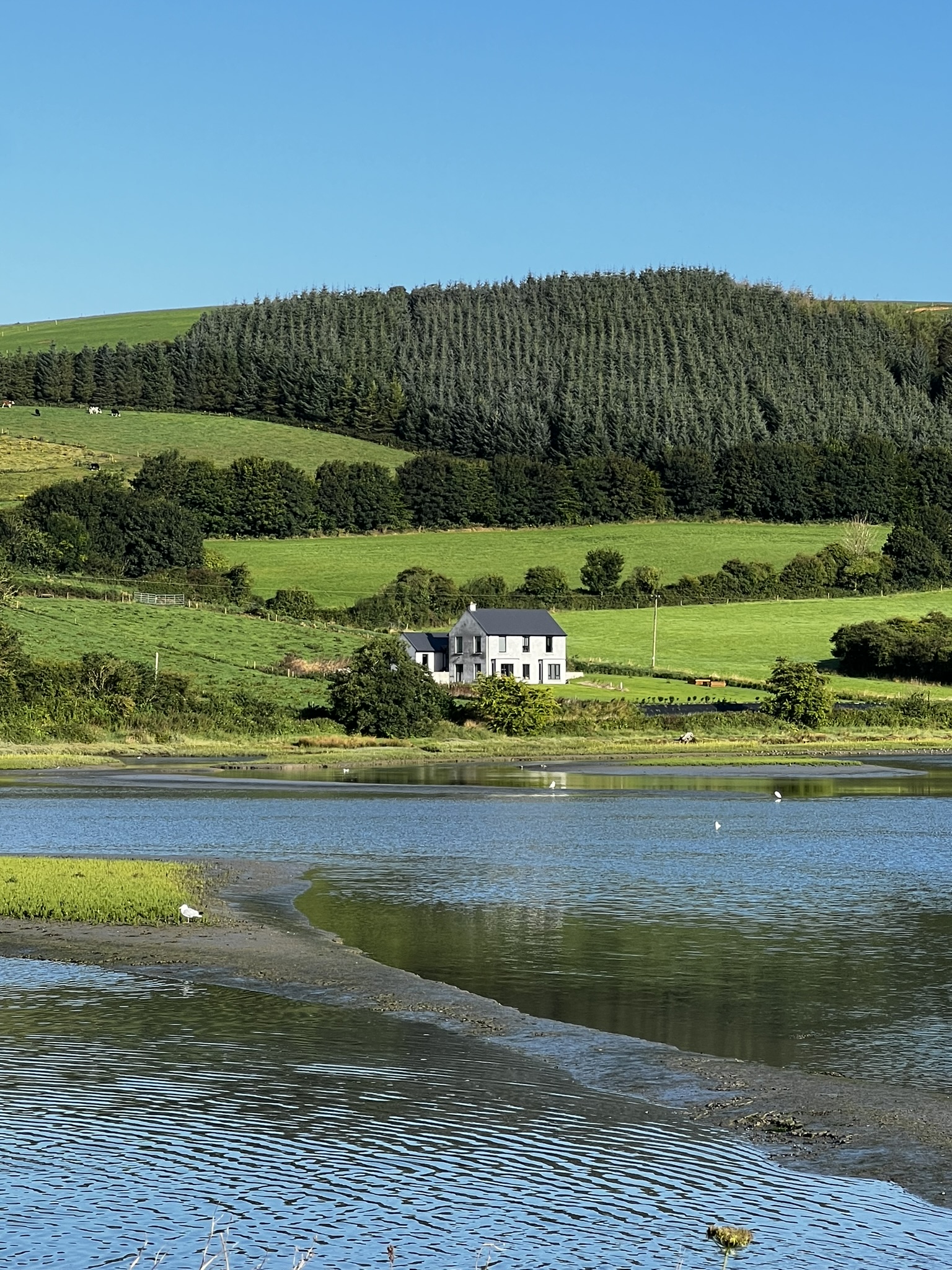
Finally, away from the Dublin airport, I saw what I had expected: green—lots and lots of green. The weather was great, and the drive along the M7 and M8 was easy. After two hours, I understood that most of this part of Ireland is rural, and while I have not checked the statistics, Ireland has to have more cows than any other country. Dairy cows are everywhere.
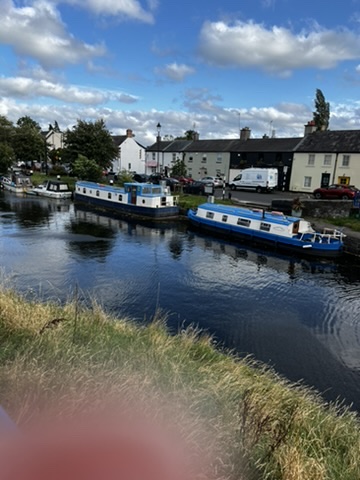
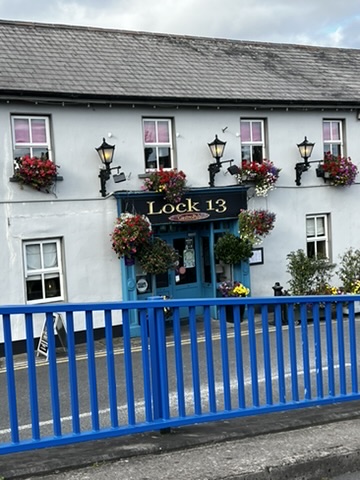
We arrived early evening and stopped at Lock 13, a BrewPub about an hour outside Dublin. It is located on the Grand Canal in Sallins, County Kildare. On a Monday night, the menu was small, but the food was better than I expected. What I didn’t expect was the lager. I’m not sure I’ve ever had a beer that tasted that good. If we had not been driving I would have had several more.
The boats on the canal can be rented if you’re interested.
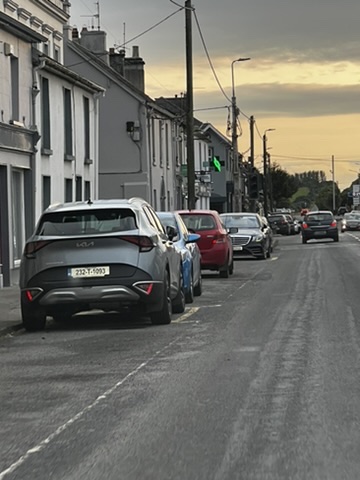
The photos below show one of the small towns we drove through before returning to the freeway to head south. This is typical of all the small towns on our drive. But don’t let the photos fool you. This particular road was VERY WIDE compared to most rural roads we traveled across the country.
If you rent a car in Ireland, get a VERY SMALL car with an automatic transmission, primarily if you are used to driving on the right side of the road rather than the left. Remember, with a straight shift in Ireland, your left hand will have to learn the gears immediately once you leave the airport, and you won’t be used to it for a day or two. You will need to tackle roundabouts and intersections that merge without traffic signals. Dealing with straight-shift driving in heavy freeway traffic is not fun. Never again.
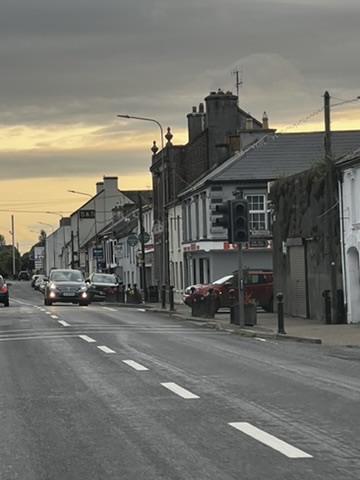
Driving through this area, I noticed that the towns were very small, and this one was only a few blocks long. This was followed by miles and miles of dairy cows in this part of Ireland, so many that you could not avoid the smell. (Dairy farms have a distinctive smell, with the dominant odor being poo. No offense to dairy cattle farms. I’m a yogurt addict.) Having moved recently to a rural area, I know the difference in the smell between chicken (a level 5 alarm smell), goat, sheep, horses, and cows. Trust me. Cows aren’t bad.
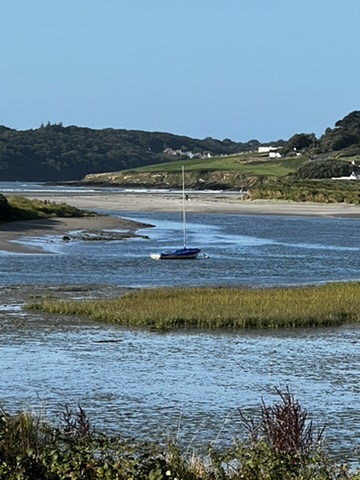
My sister told me to drive along the western coast of Ireland, and she was right. After we left Cork, every turn revealed a sight more beautiful than the one before it. I learned that the most scenic route is along the R600, part of the Wild Atlantic Way tourist route. This road is the dream experience for any amateur photographer.
The Wild Atlantic Way (this link is the official page) follows Ireland's north, south, and west coasts. It is 2500 kilometers (1553 miles) and has over 1000 attractions listed to see. In August, I expected the entire west coast of the country to be overrun with tourists, but it wasn’t. Maybe it was because I selected out-of-the-way places to visit, knowing I would need several weeks when I returned (not my husband’s usual three days) to see the area properly.
I had a visit to Dingle on my list, but after calculating the driving time from Kinsale to Galway, I marked it for the next visit. Because of the increase in temperature in July and August in Türkiye, I’ve already made it known that I will travel north for two to four weeks each year to avoid the heat (and no air conditioning.)
My next visit to Ireland will be a prolonged (and solo) meandering trip from Cork in the south to Malin Head in the north, then to Sligo and Belfast. I want to stop at everything remotely interesting, talk to the people, and thoroughly explore the country.
Take a hint from a frequent traveler. To see Ireland correctly, you must take it slow.