Living in the Patriarchy
The impossible escape from a male dominant culture
We Americans throw around the word “patriarchy” many times without thinking about the strict definition. Many real-world examples expand this Oxford definition. What does the word mean to you?
If you don’t know me personally, I am a blonde, white female with a three-hundred-year English and Scottish heritage (according to Ancestry.com.) I was raised in the upper middle class of the United States Deep South. My parents voted for George Wallace. I am definitely from a white, conservative, and privileged background. My high school was one hundred percent white (the principal refused to enroll anyone not white), and the university I attended had a meager percentage of minorities.
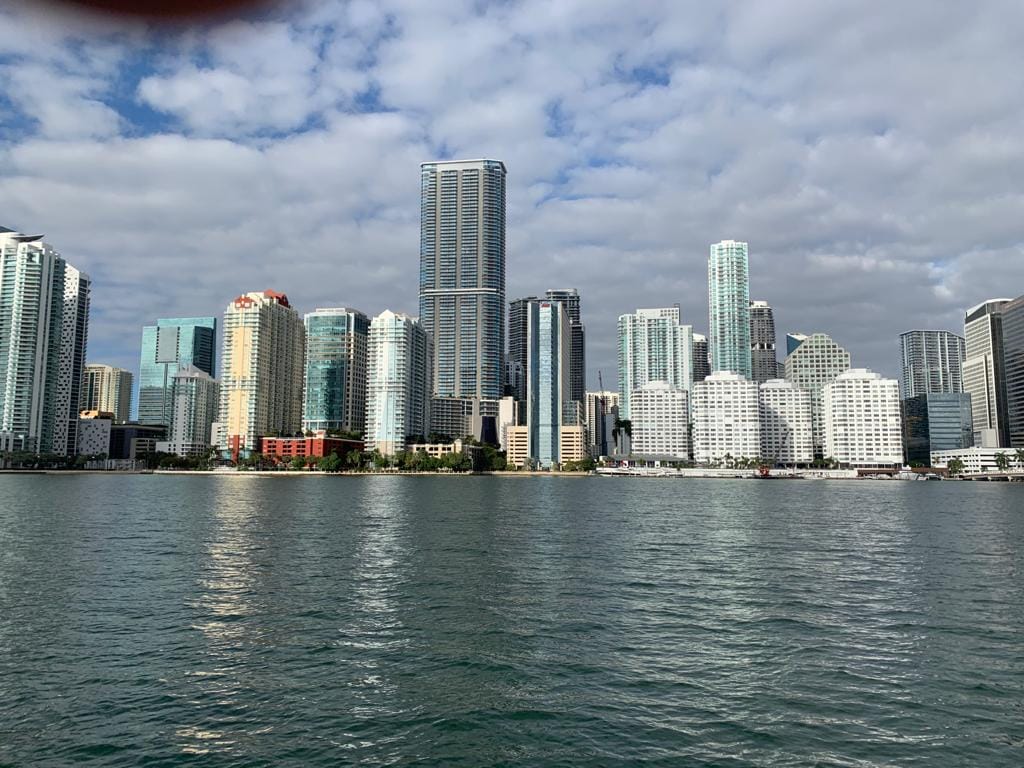
I have never given sufficient thought to the definition of patriarchy. Our southern culture was just the way it was, but I had no thoughts of changing it. Until I decided to move to Türkiye after law school, I did not realize that life could be different, but that’s a story for another day. Moving recently to Miami provided an up-close experience of patriarchy. Even though it is a Florida city in the U.S., remember that Miami is its own country.
Even so, as a real estate lawyer, I am used to exact paperwork regarding names, addresses, and legal descriptions. For example, our names are listed on the deed to our property in a specific order. In the U.S., I am listed first, and my spouse is second. This is because we have been a bi-country couple for over thirty years. I handle matters in the United States, while my husband handles everything involving Türkiye.
Not in Miami. Even if my name is listed first, only my husband receives mail or a telephone call. My husband thinks this is delightful as he has always been secondary in the U.S. My complaint isn’t that he is listed first on all paperwork; I no longer exist.
I had to discuss this problem the first few times with whatever company or government entity was sending the bill to ensure my name was still in their system. I was worried they had eliminated me. Once they had. I was told there “was not enough room” for both our names in their software, so they dropped mine. According to their internal policy, the man is always listed, and the woman is omitted if necessary. It's infuriating and frustrating; as a lawyer, it is shocking. This is not the way legal documents are supposed to be treated.
As a sixty-five-year-old female, I’m used to being invisible. I’ve been invisible for about ten years. I fully understand why the Red Hat Society is needed. I’ve been ignored in many situations, and I’m used to having male-owned construction companies tell me how they will do something, even if it is not what I want.
Everything is a fight.
But it doesn’t happen here in every instance. Except for two specific nurses, I have not been invisible in the medical field in Miami, nor have the male physicians treated me as a second-class citizen. Unfortunately, I’ve had too much experience in this area over the past two years. One male physician told me that he could tell from my face that I would have a lot of questions (or maybe he saw I was a lawyer on his intake form), so he spent an entire hour explaining every possible test outcome of the tumor biopsy (which fortunately, was benign).
I am the minority now in both cities where we live, Istanbul and Miami. I’m clearly in the minority in Türkiye, but I’m not invisible. I’m treated as a visitor with something important to say. Is it because I’m American? I’m not sure. I’m curious whether this will change once I apply for citizenship this summer and live there practically full-time. Given my thirty years of exposure to the country, I don’t think anything will change, but I may be in for a shock. We’ll see, won’t we?
As for Miami? I am thankful, as a female, that I do not practice law here or run a business. It was a difficult beginning in South Carolina, but not as tricky as Miami would have been had I practiced law here. In Columbia, SC, I never considered all those times when I wanted to bang my head against the wall that it might be because of patriarchy. I was told I was “difficult,” “a bitch,” and “hard to work with.” It was always my fault. I remember the shock of getting my male colleague’s paycheck one day in error as an associate at a prominent South Carolina law firm. I learned he made a significantly higher salary even with my better experience and grade point in law school.
Even in the much different (and more open) legal community in Atlanta, I finally had to go out on my own to practice, something my CPA had encouraged me to do for years. Yes, I’m aggressive and particular. I think those are traits most clients prefer in their legal counsel. I finally felt free, which led to significant success, even though being an attorney was still stressful.
But there was always something lurking in the background, even in Atlanta—that I was second class because I was a woman. I guess I got used to it, and it didn’t slap me in the face again until we moved to Miami. Is this what others across the country face when dealing with a “white” America? If it is painful some days to be a white woman in Miami, I cannot imagine how others who are not white have been ignored and belittled their entire lives across our country. Despite my limited experience, I don’t think I have genuinely felt their reality.
I’m thankful for those who tolerate my negligible Spanish in Miami and help me do what needs to be done. Yet, the patriarchal culture here has made me think about my children’s future. We need to eliminate it. Their future depends on it.