Riding a Turkish Dolmuş
(It's Just a Minibüs, Ya'll)
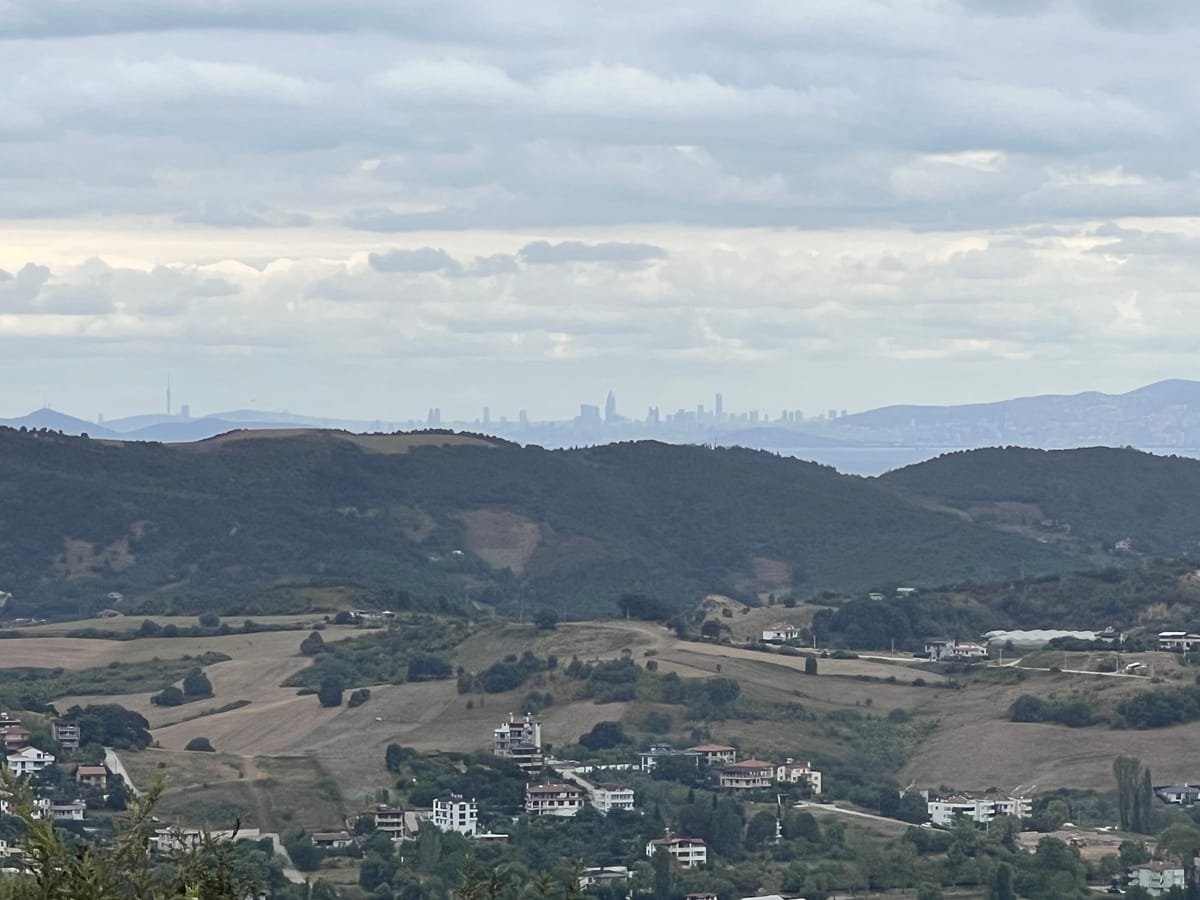
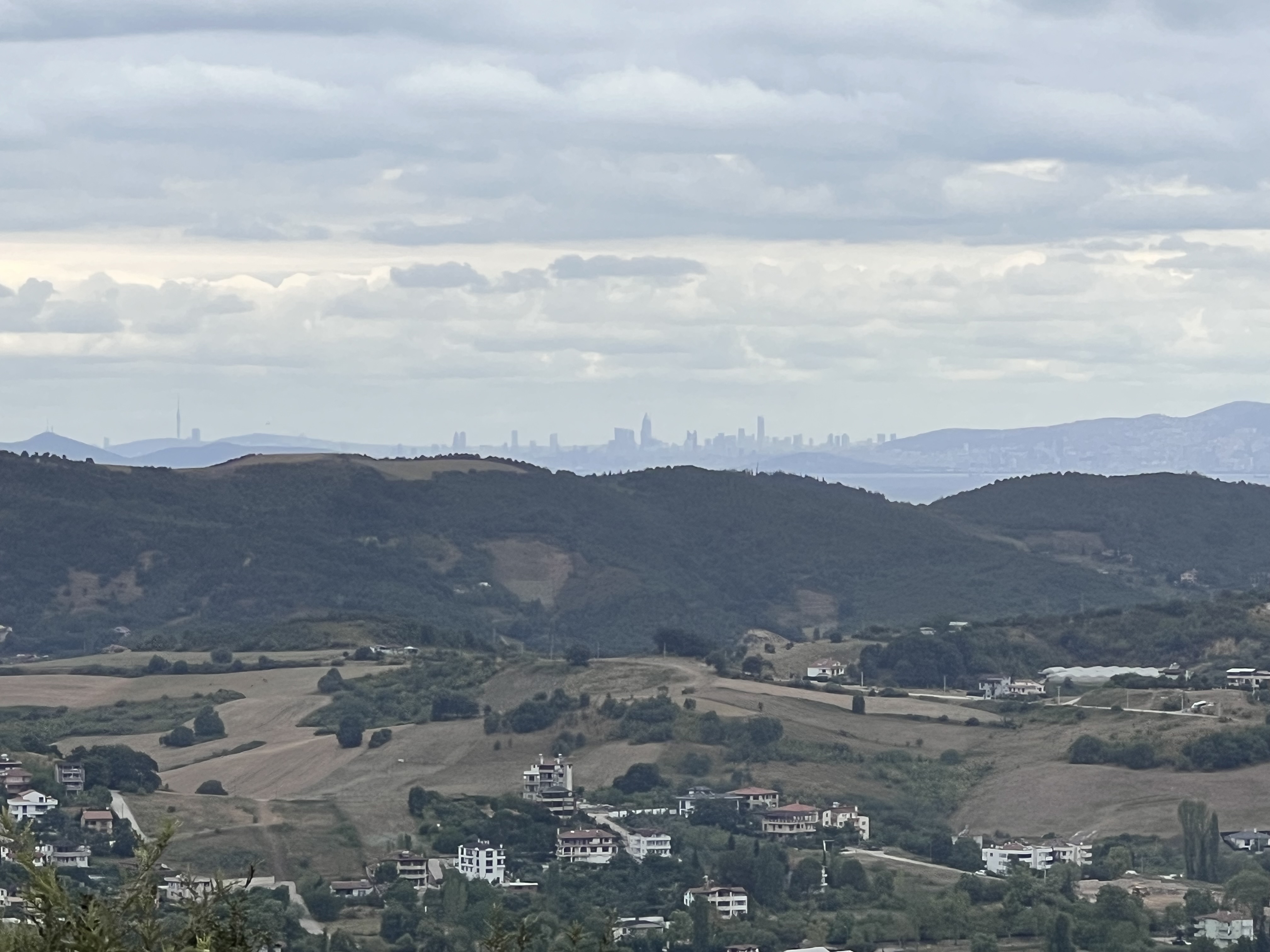
This photo was taken from where I live, and the city skyline you see in the distance is Istanbul (the suburb of Pendik, technically). We have one car, and if I decide to go to Istanbul for the day, or work there for several weeks in a quiet environment, public transportation is my only option.
Our back driveway is through the national forest and down the hill to the minibüs stop. It’s a beautiful twenty-minute walk. During the day, there are usually two or three little buses waiting, and they leave every thirty minutes or so.
Here’s the catch that you won’t know unless you live here: From this beginning stop, the dolmuş will leave about twenty minutes early. Sometimes several buses leave at the same time, so you need to be certain where each is going, rather than assuming. No sign or placard is telling you where they are going. You have to ask in Turkish. He doesn’t speak English. None of the drivers do. Then, because I’m an obvious foreigner, he asks me several times where I’m going.
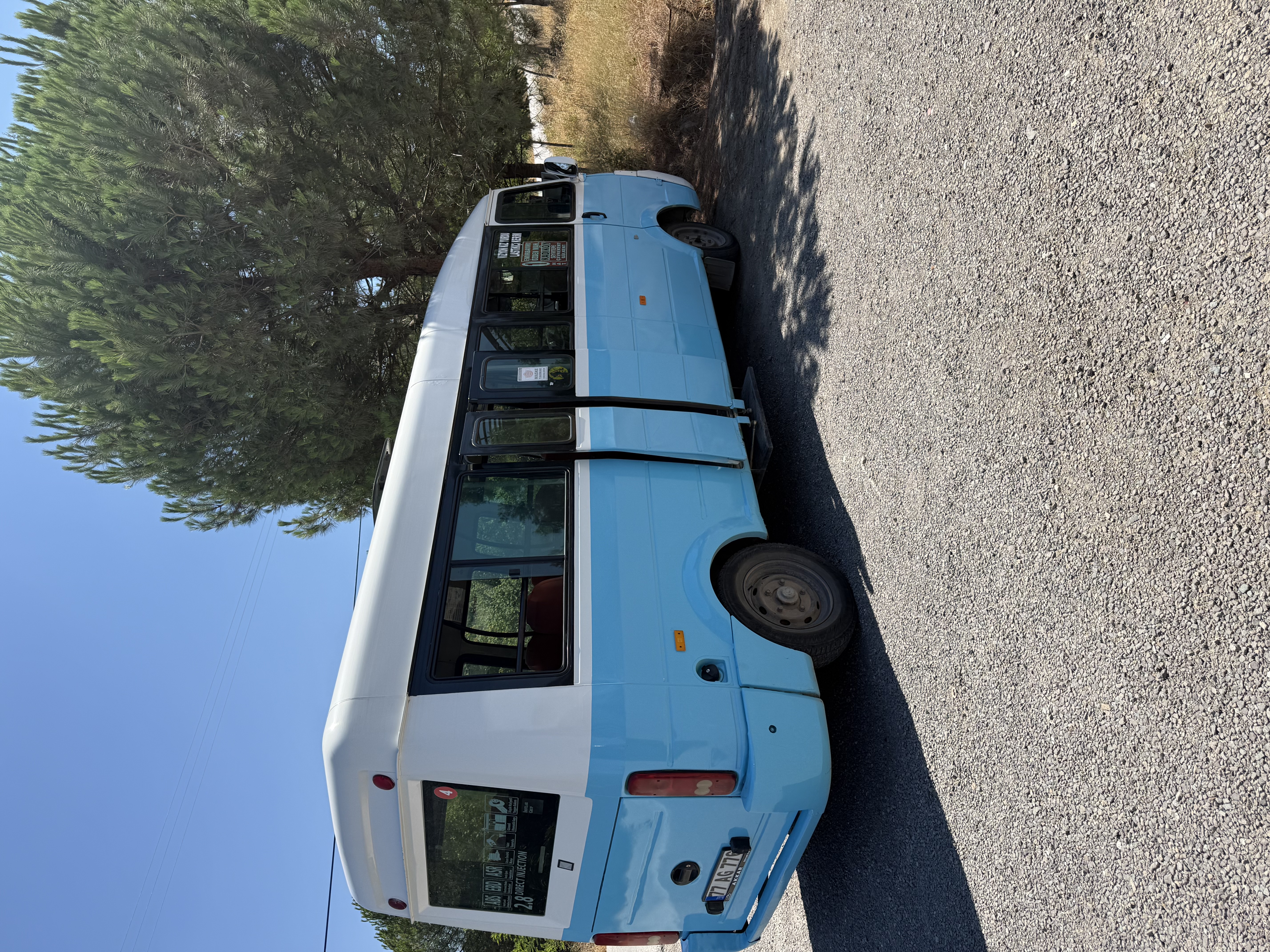
What’s different about riding in a Turkish dolmuş (the ş sounds like “sh”) is the fare collection. You step into the little bus and take a seat. You pass your cash up to the driver for the full fare. If you give him a large bill, he will pass back the change. The fares to most of the main locations on the route are posted on the inside wall of the bus so that you do not have to guess. As you pay, you tell the driver at which stop you are getting off.
I have been using Turkish minibüses for over thirty years. I find it comforting to see the entire community pass their hard-earned money through a dozen or more people's hands to a man they do not know, and receive the correct cash back every time. Sometimes they pass their Turkish ID cards or other essential documents forward, showing that they have free bus service. And those always come back with no problem.
I’ve never seen anyone get cheated, nor have I ever seen anyone complain. Because of inflation, the fares change frequently. Still, people don’t have a problem with this process. If you’re here and use a dolmuş, be sure you have enough cash on hand. (We’ll talk about that later.)
Then, we’re off! At a whopping four (yes, 4) miles an hour for the first mile or so. What is he doing? He is syncing up with the return driver heading toward him on the route, ensuring he is not following the previous driver too closely. Doesn’t he wear a watch, you ask? They don’t do it that way.
For some rides, you’ll see new training drivers enter the bus. Sometimes they watch, other times they drive. The new guys usually don’t do the sharp turns well, and also get a little nervous on the tight streets when cars (and huge trucks) are parked on both sides. But the regular driver is always there, coaching him along. (I’ve never seen a her.)
On the minibüs, women almost always sit with women and men with men. There is no leg spread, no problems, no harassment. Everyone is respectful and courteous to everyone else. I’ve seen drivers stop and wait for minutes while an older farm lady loaded her glass jars for canning. I’ve seen men board with huge newspaper-wrapped armfuls of flowers for someone they were delivering to downtown. I’ve never seen anyone listen to video calls or telephone calls openly on a minibus. They may take a quick call, but that’s all.
Finally, you’ll arrive at the destination. My drivers always come to a complete stop rather than pausing briefly. They turn around and yell at me that this is the ferryboat station and I need to get off. Yep. Every time.
It’s interesting when I return from the ferry to my home. The ending minibüs stop is located on the side of the mountain, with very few houses nearby. When I pay the driver my fare and tell him I am getting off at the “depot,” each driver is immediately confused. “Where is your house?” they ask. “In the forest,” I reply.
For the first year, they didn’t believe me, shaking their heads as I hopped off and began to walk into the national forest. Now that we’ve been here a while, I get off at the end of their route at the “depot” and start walking up into the national forest where my husband and our huge Akbash dog are usually waiting.
And once again, I’m home.