Test Driving Book Printers for Authors
It is incredible the things I don't know about this industry and the TIME it takes for everything
I’ve been test-driving printers for my book business at RSHamptonBooks. This post is about paperback and hardback printing — not ebooks or audiobooks. And not travel. If you’re not interested in the writing business, click the heart to show your support (thank you), and I’ll see you when I’m in Istanbul, Turin, Milan, and Zurich later in January and February.
This is my experience as a writer setting up a book business. It is not “expert” by any means. Yet, I thought both new and experienced indie writers might appreciate my experience and also provide feedback on things I missed.
Why Your Paperback Printing Choice is Important
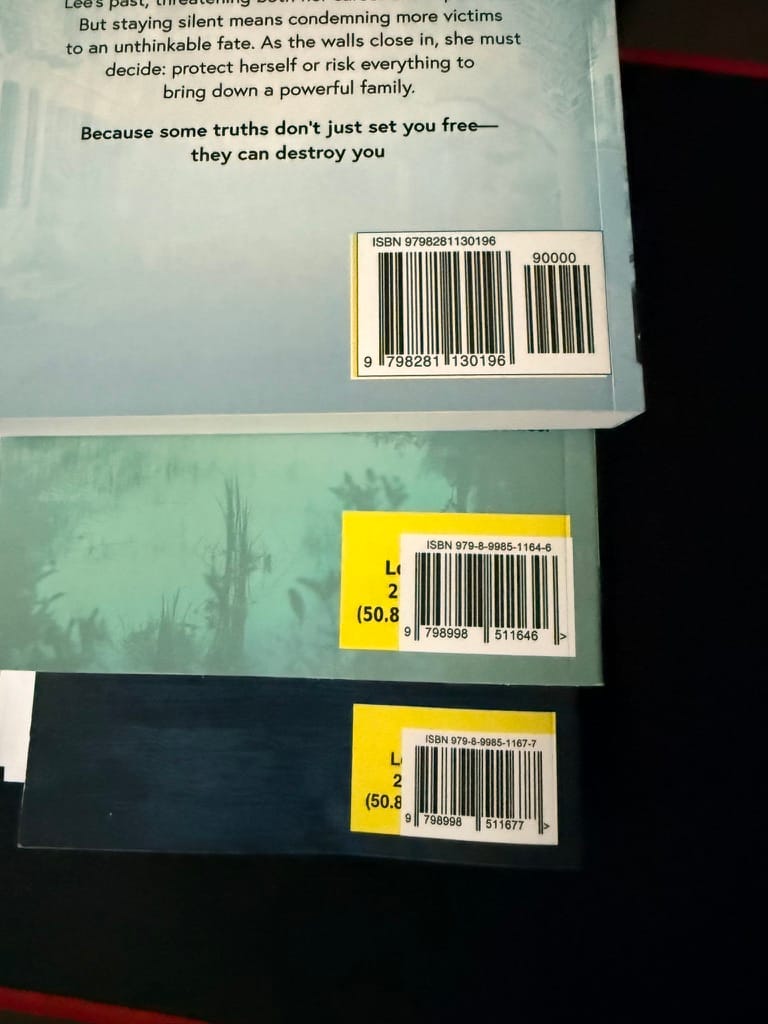
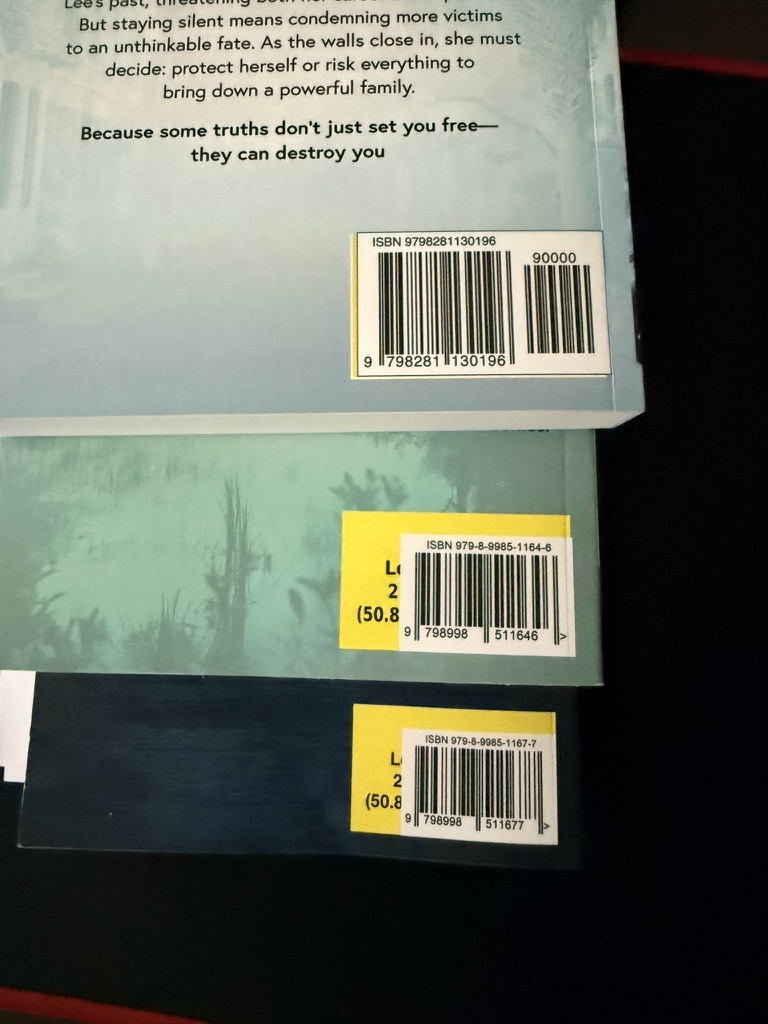
Each little piece of a printing company’s platform requires extreme attention to detail, something I don’t have some days. And then on other days, that need for detail gets ridiculous, like these barcode spaces below. Part of me says, “Who gives a crap?” yet we all know that our hard work deserves more respect than this. It needs to look good everywhere, not just the words inside.
Templates - Use Them
Each printer provides a template for your cover when you set up your novel in their system. I give that template to my cover designer, and he makes it fit that platform. With my debut novel, I used one template for every printing/distribution platform, and there was minimal (cover) discrepancy between printing companies, even using the same (Amazon KDP) template.
A rookie mistake. I lucked out the first time in having to pay Nick, my cover designer, only once. However, six months later, sending two new books to the same printers with the same template caused problems. As you can see, the barcode space, with the same template and book sizes, now does not work.
I thought I would outline the printers and the issues I’ve had to give new authors the basics on finding a printer that suits them, and possibly reduce their problems along the way. I’m sure I’ve missed some, and I’d appreciate it if you could let me know in the comments.
What Am I Expecting?
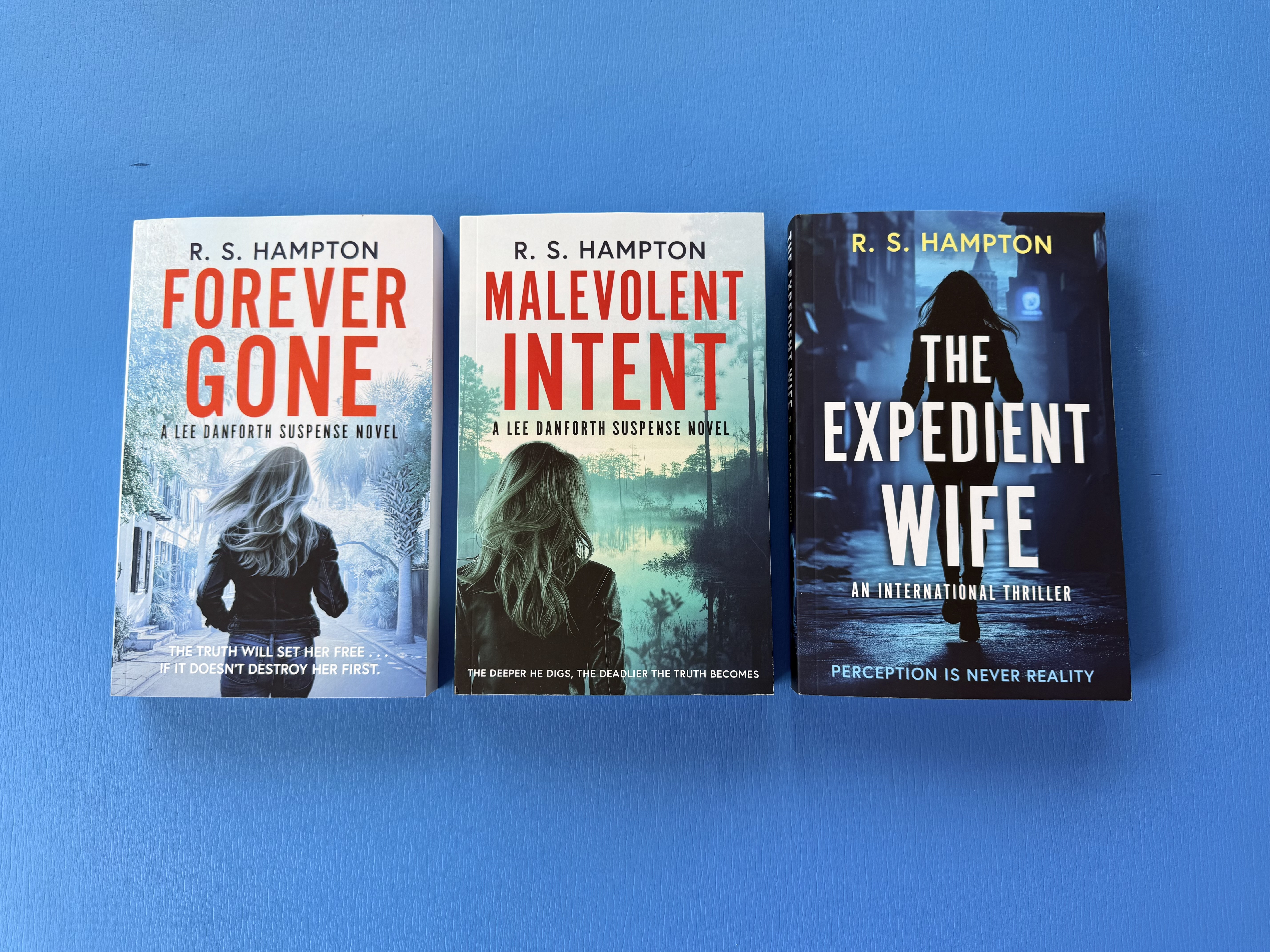
I want a 5.5 x 8.5-inch book, with a matte cover and sturdy white paper (not thin crappy cream) inside. I have no fancy maps, photos, or color anything (yet). I am expecting a professionally printed book that a reader would expect to see in Barnes and Noble or another bookstore—books like these below.
While I know you cannot understand from a photo, when you pick them up, they are excellent quality with good covers and thick white paper inside. No ragged edges, no misprints, no issues at all (other than my barcode mishap on the back).
So, Where Do You Start?
Since my goal was to go “wide” (distribute everywhere, to every country possible), I knew I would need to open an account and test-drive every printing platform. You don’t need to do this; it’s just how I roll. Some print only in the US, others print globally. Many platforms support multiple formats; others only support hard printing. I wanted to explore them all, so I got ready.
Some beginning points:
#1. Don’t let the massive number of platforms confuse you. Get out your trusty notebook or wherever you keep yourself organized, and keep a list of who does what. Make notes to remind you where you are in the process with each.
#2. Please don’t select just one. You always need a backup printer. If you don’t believe me, I’ll let you talk with my book friends.
#3. Get ready with your pre-setup paperwork.
My LLC was formed some time ago, and I had my EIN (the company tax ID number) in hand. The discussion with my CPA was held six months before I began selling books. All my businesses and rental properties have their own LLCs and EINs, so this wasn’t a big deal to me. If you don’t have a limited liability company for your book business, you need one for tax purposes alone, much less for liability. Stop treating your writing like a hobby. It is a business, and you must be a business person as well as an author.
To prove I was a real person, I also gathered my passport and my driver’s license, bank account information for where I wanted the royalties to go (yay!), and one credit card for any business charges, such as my author proof copies. This is a business. Get an accountant. Make sure they understand LLCs, sales tax, and book platform distribution.
#4. Please don’t wait until the last minute to do this. Set up each account 60 to 90 days before the publication date, or earlier. There is a lot to do. Business things take time to verify, and you may have to upload various forms of “proof” multiple times. And this is before you even begin uploading your novel.
Setting Up Your Account
Once you set up your first account on a platform, the setup process will be the same for all other platforms. It takes time. Here is what you will be setting up:
Your identity
You have to prove you are a real human, not a bot.
Upload whatever verification document they require — usually a driver’s license.
You’ll use your full legal name.
They will want your personal residence, date of birth, and phone number.
Account details
Are you an individual or a corporation?
What is your business name?
What is your business address?
They’ll need a phone number. I use one for everything. You might not want that and wish to set up a virtual phone number for your publishers.
You need a separate bank account to receive your royalties
This setup took some time. I went to my small town bank to set up an LLC account. They needed a lot of info, and their legal department had to approve. Then I had to set up other internal things for that account.
Set up your Tax Information
Is your LLC a pass-through organization?
Or are you using your personal Social Security Number?
You will receive your KDP Account ID Number.
This is a good time to set up your Master Publication Spreadsheet. It contains all the pertinent details about your books and accounts, so you can find what you need quickly. You will need it often.
Once your account has been set up and verified, you are ready to go. But wait! Do you have all the pieces ready for your book to be uploaded?
Now, set up your novel.
What you’ll need:
- Your manuscript, properly formatted. (I use Vellum and it takes less than two minutes.) I have had only one bad experience with Lulu (see below) and stopped anyway after seeing the printing price.
- Your book’s cover, again properly formatted. This might be the time to stop what you’re doing, download the template, and either fix your cover or send it to your cover designer to ensure it works on this platform.
- You may not know there is a problem until you receive an error message from the platform, but if you use Vellum or other good formatting software, you should be able to correct any issues with your manuscript.
- I am at a loss with cover designs. I have to rely on my designer.
Let’s GO!
First, let’s talk about printing. Do you know what Print-On-Demand (POD) means? Warehousing? Order Fulfillment?
Amazon’s Kindle Direct Publishing (KDP)
So let’s get started. Everyone gravitates to Amazon first. It is the behemoth and has the most extensive readership. I’ve always been a renegade, so it’s not my first choice, but it is definitely a choice. And yes, I started there first, like everyone else. (I am now officially a sheeple.)
This company is the easiest to use. It still takes some time to set up your account, as they have to verify your tax ID and bank account information. They want you to use only them, and I have to admit that this platform is more intuitive than all others, making it easy to get you hooked. They also have an automated quality control feature that works well. It identifies anything it thinks is a misspelling or other quality issue and lets you know immediately.
Note: If you have a personal Amazon purchasing account, and you have entered your home or cell number for that account, Amazon will NOT allow you to also use that same cell or home number for your KDP account. If you intend to use a phone number for anything in KDP, you’ll need a different one. I don’t have a second number available, and so far it has not been an issue, but I am waiting for the day the problem raises its ugly head.
The price for Amazon to print my example book is $5.61 (5.5 x 8.5 at 384 pages). Yet the consistency is not there for me. I have ordered all three books above, and they have arrived in various stages of quality. I’ve not had the serious issues that my friends have had, such as paper cut too short or ragged on the bottom, replacement issues for ruined books upon delivery, but I’m still not happy with the result.
And I’ve realized that I get rapid delivery because I am a Prime member, and my author copy comes through Prime. My friends tell me that non-prime members have to wait about 3 weeks for delivery. I have not tried to ship globally. I will do that part of the experiment next summer.
IngramSpark
This is a major publisher that also distributes to bookstores, libraries, and other places where people find books, including discount platforms. The cost for me to print my book here is $6.83. The quality is reasonable, except they fought me on white paper, insisting that the size of my cover was only for cream paper. (What?) I gave up since I knew that I would not be ordering from this company due to the difficulties with basic things.
What is NOT REASONABLE is the royalty manipulation that I have to deal with. It is shocking how little I get paid in royalties. My first two books sold were paperbacks in Germany. IS paid me $.084. Yes, eighty-four cents for two paperback books. I spent an hour going through their pricing page for all my books, realizing that even on the e-books, they are LIMITING THE PROFIT.
Then there are the return requirements for bookstores. Please educate yourself on what this means. Many sources discuss the printing and distribution issues of paperback and hardback books to bookstores and libraries. Read up. It is a major point that an author needs to know that is beyond the scope of this post.
Book Vault
Book Vault has been a quality printer at a price of $6.69. I ordered author copies recently and received one within seven days and the other within ten using the cheapest shipping price. The books look excellent and are printed exactly as I want them. I have selected this company as my main Print On Demand printer. When a customer visits my website and orders a paper book, the order is sent immediately to Book Vault, where it is printed and shipped.
I have not shipped globally yet, as we are beginning with the US first before adding other shipping regions, mainly because of the taxes involved. I will order samples sent to various places overseas this summer and will update you.
Draft2Digital
This company is basically a duplicate of IngramSpark and I understand it uses IS for print fulfillment. Yes, their overlay is easier to deal with than the clunky IngramSpark platform. However, I cannot get a print book to work in their system, regardless of what I do to the cover. It wants me to use their cover creator, upload the front, and it wraps the rest of my book in white, defeating the purpose of having a good designer do my covers. I am not artistic. This is not an option for me.
I do use D2D for ebook and audiobook distribution to the other long list of small suppliers. It is worth your time to get familiar with what they do. You might not have issues with their cover process.
Lulu
The $11.13 price to print my book took this company off my list entirely. Why is it almost double that of the competitors? I have no idea, as I received multiple error messages for the interior and the cover. When researching why there were so many issues, I learned that their AI system review is too restrictive and creates problems where none exist. I could not confirm this was the case, so I moved on because of the price.
Lakeside Printing Company
This is a full-service printer that will warehouse and fulfill customers’ orders. The salesperson I met at Author Nation was extremely friendly, though his supervisor was offended that I had never heard of the company. Lakeside just purchased Baker & Taylor (or at least part of it—you can research this online easily). I got no further than the initial sales call because the salesperson could not answer my questions, and they have no relationship with TikTok, which is the only reason I would need volume sales at this point. I do not know the printing costs as I did not get an estimate.
Acutrack
This company is a full-service book printer that warehouses and fulfills your orders. There are some limitations for new authors, and you may find, as I have, that until I take the next step (or become famous on TikTok), this is more than I need. Acutrack requires you to purchase at least 300 books, which they will warehouse for you. My cost per book is approximately $6.50, so the initial outlay is $1,950. They expect this minimum order to sell within six months. If they do not sell, you will begin paying warehouse storage fees for your books at approximately $27 per month.
There are other mandatory setup fees for Shopify (that I don’t need but will have to pay) that concern me, as well as another set for TikTok Shop. Still, they do directly interface with both companies, which will be important for volume sales. I’ve put this choice on the back burner for the future.
Are there others?
I am sure there are. After these seven, I felt I had enough information. And remember, this discussion only involves printed books — paperbacks and hardbacks. I’ve tested only paperbacks thus far. Hardbacks, fancy gift boxes, and swag are down the road for me.
In future posts, I’ll provide the same type of information for ebooks, then another for audiobooks. Let me know if there are any aspects you'd like me to discuss.