The Kampong National Tropical Botanical Garden, Miami
A Relaxing Getaway from the Noise of Miami
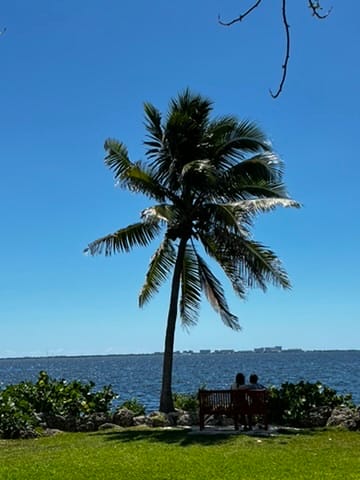
If you are visiting Miami, the botanical gardens in Coconut Grove are close to downtown yet far from the insanity.
The Kampong is the former home of the botanist David Fairchild and Marian Hubbard Bell, the daughter of Alexander Graham Bell. The Fairchilds lived in the residence on Biscayne Bay until he died in 1954.
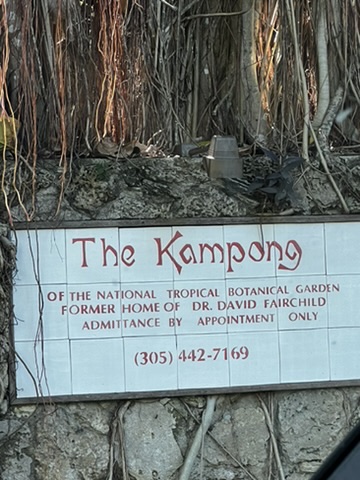
The home and property are part of a network of botanical gardens, preserves, and research centers in Florida and Hawaii. The Coconut Grove location in Florida has a relationship with Florida International University to continue plant exploration. The receptionist for the grounds was exceptionally friendly.
If you have read my previous posts, you know I am always looking for places off the tourist path where I can relax in the quiet. This one wins spectacularly.
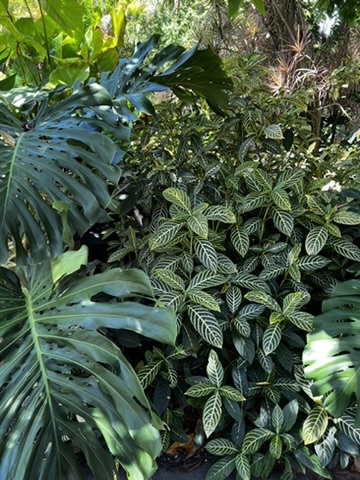
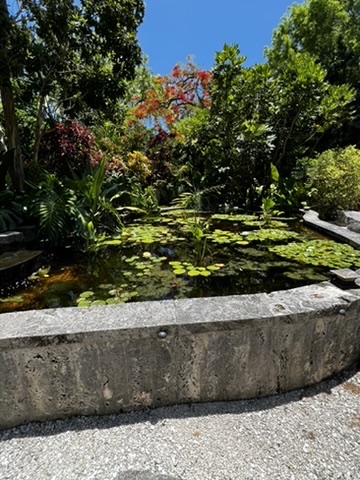
Exiting the car, we were met with lush growth adjacent to a lily pond. I knew we were very close to the ocean and not far from a main street, yet none of that sound could be heard on the property because of the thick growth.
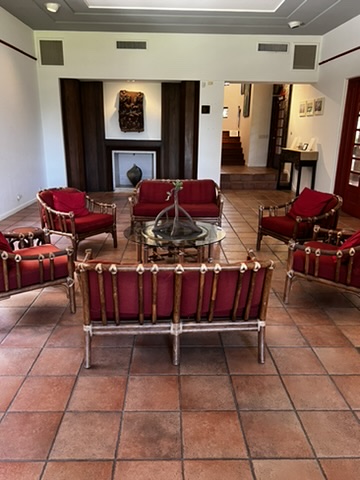
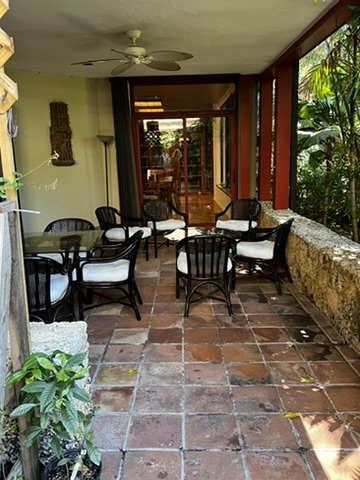
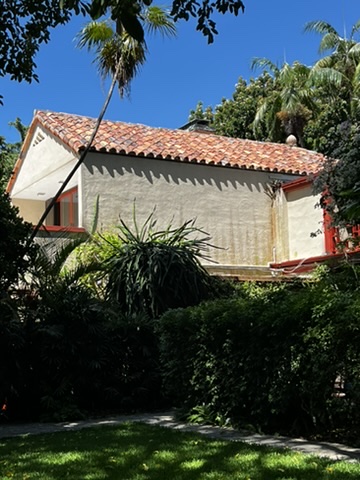
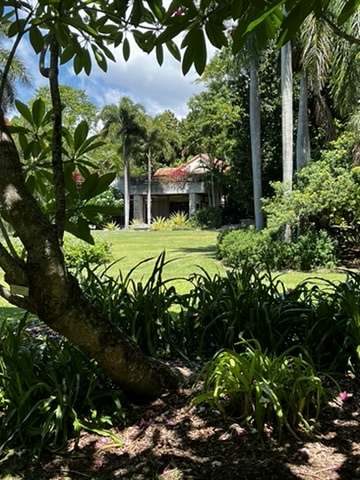
The home is a typical Miami-style Mediterranean stucco with tile floors and a large outdoor area for entertaining. I could envision entertaining here in the 1920s or 30s, with dinner, drinks, and cigars outdoors on the lanai. I felt Earnest Hemingway would turn the corner at any moment with a boisterous laugh and another story.
Now, there is yoga every Saturday.
We wandered about the gardens without being restricted except by the warning signs not to feed the crocodiles. We could hear a peacock, but I’m not fond of those, so we stayed clear.
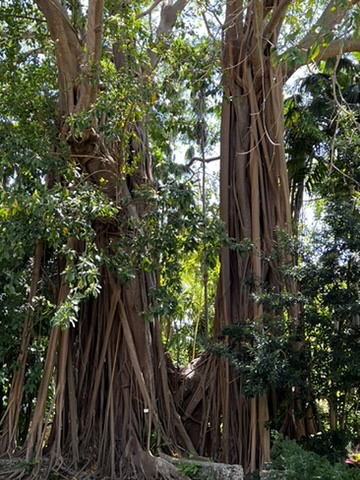
This large tree below is a ficus. I’ve had them as house plants, but I had no idea they could grow this large. Of course, in Miami, everything grows rapidly in the heat and humidity. I learned that the property originally was coral blasted to make it level and then compost and mulch was added to make soil over time.
Because Fairchild introduced over 200,000 exotic plants and other varieties to the U.S., the Kampong exhibits all sorts of food-growing plants and other non-native species of trees and flowers. The list includes miracle fruit, cannonball tree, screw pine, coffee, madruno, kapok, bird’s nest fern, fairchild’s fig, bignay, canistel, cacao, breadnut tree, vanilla, tamarind, American beautyberry, seagrape, saraca, corypha palm, silk floss tree, sapodilla, espalier, frankincense, ylang-ylang, star fruit, pomelo, buccaneer palm, and jaboticaba.
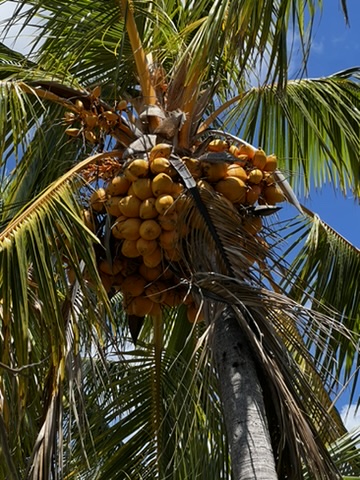
The Kampong provides a guidebook with details of the above items and photos so that you can identify them on the grounds. I was fascinated by the number of coconuts on the palms.
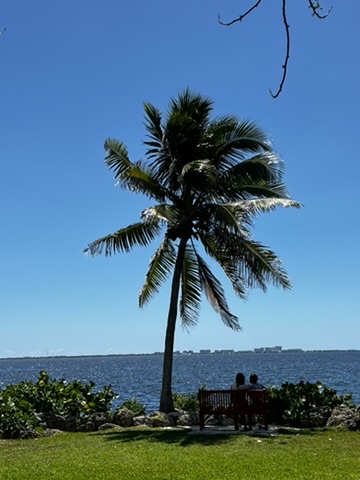
Walking toward the ocean, a large green area has scattered benches in the shade to relax. We sat for an hour in the breeze, talked, and agreed this would be a wonderful location for a picnic.
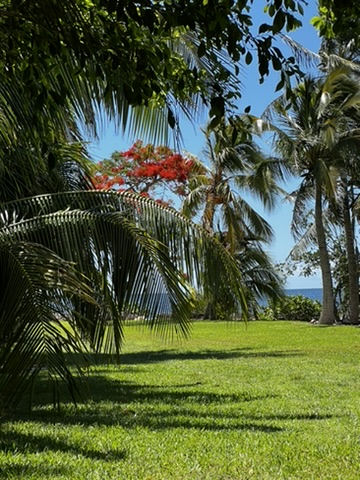
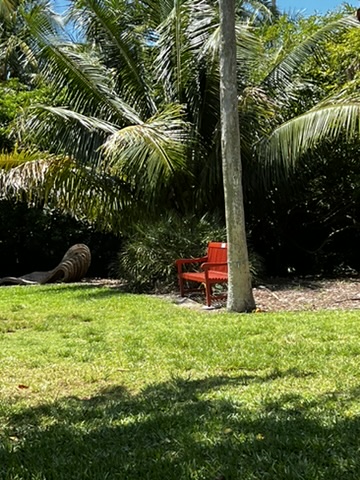
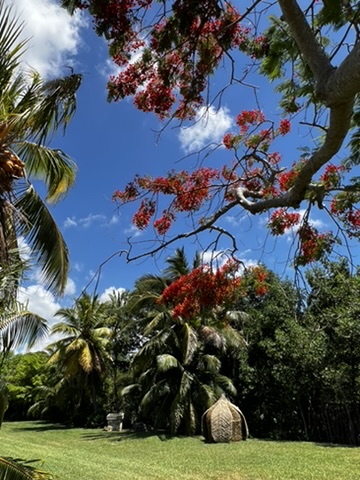
The poinciana trees are in bloom now, and several large ones are on the property. I didn’t realize how close we were to civilization until I stepped to the end of the Point and could see buildings very close in the distance.
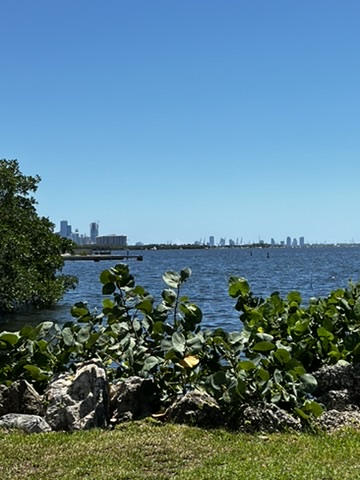
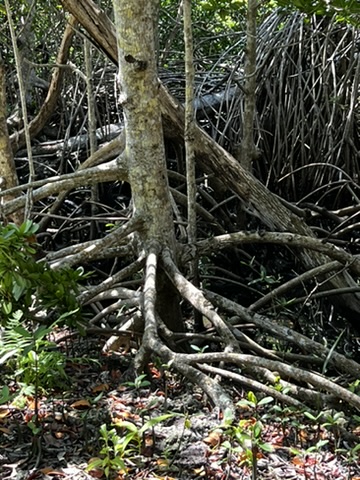
What looked like a boat canal was dredged alongside the property, and the edges had gigantic mangroves (luxury accommodations for the crocodiles) hugging the shore. While familiar with mangroves, having lived in Key West, I have never seen roots this big.
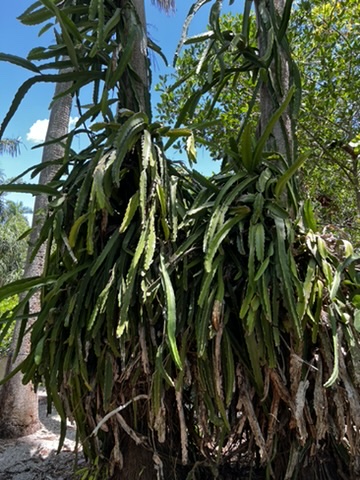
There was this cactus-looking plant crawling up a palm. Can you tell me what this is? I could not find it and forgot to ask before we left. Most plants are labeled, but I could not find the name of this one.
This was a great place to get away from life for a few hours. If I was a crocodile, I’d definitely make my home here.